Last updated 25 June 2026 · OpenGlyph Editorial
Trust is the whole point of an open library. This page describes, openly, how the team behind OpenGlyph.org curates entries and verifies that they’re accurate and render correctly — the experience and expertise behind every page.
Why this page exists
Anyone can paste a wall of symbols. Few test whether those symbols actually display, or check the facts behind them. We do both, and we show our work with a visible “last checked” date.
Verified rendering
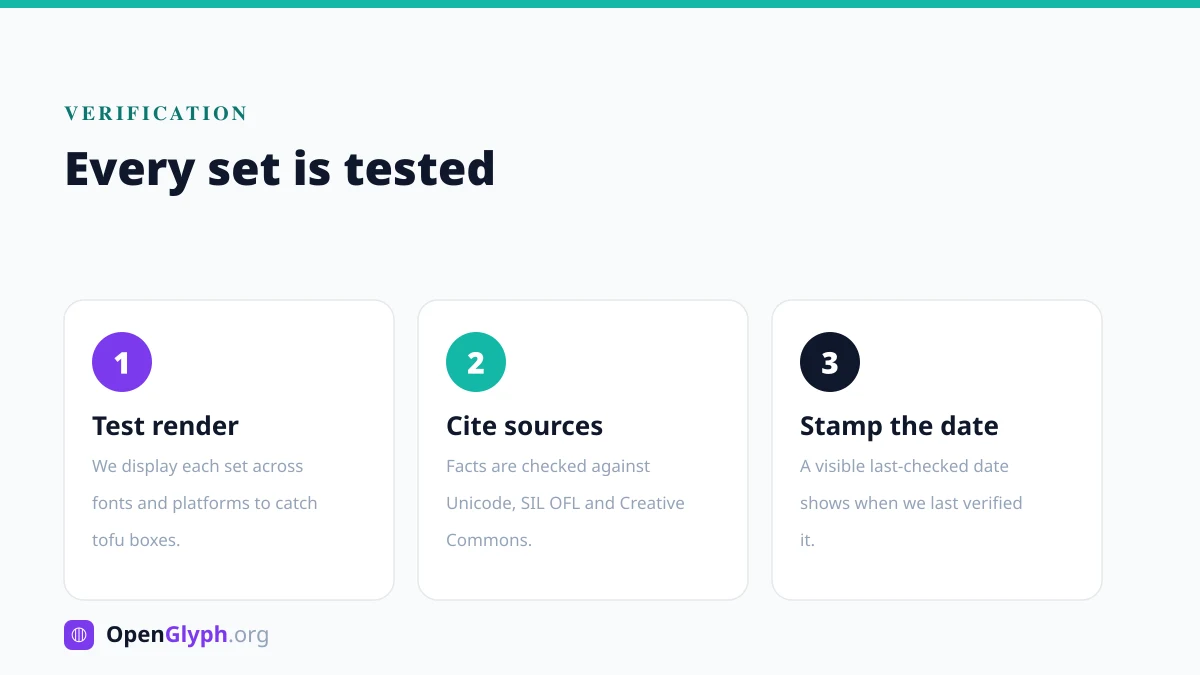
Before a set is published, we display it across multiple fonts and devices to catch “tofu” (the empty boxes that appear when a font is missing a glyph). Entries that only render on one platform are labelled as such. Each library shows when it was last checked.
Primary-source accuracy
We verify Unicode and licensing facts against primary sources while writing — never from memory or hearsay:
- The Unicode Consortium for code points, blocks and the emoji proposal process.
- SIL Open Font License for font reuse terms.
- Creative Commons for community-content licensing.
We never promise a character “won’t get your account banned” or is “100% safe” — claims like that aren’t verifiable and we don’t make them.
Platform compatibility
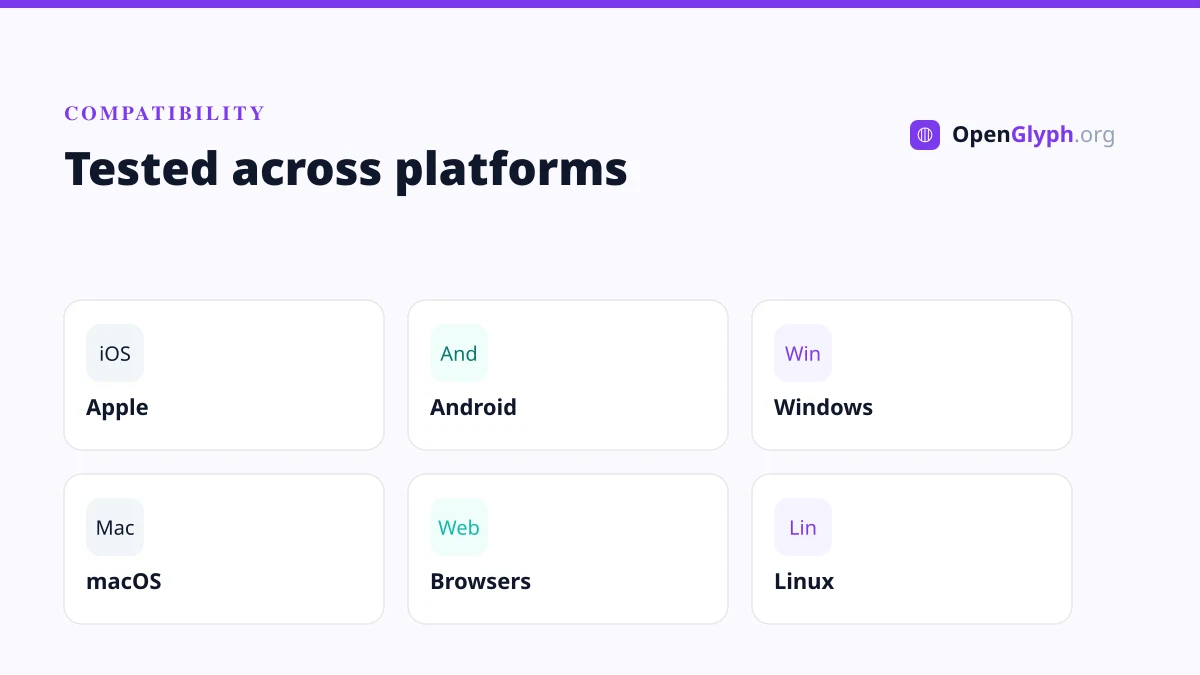
The same code point can look different — or break — across iOS, Android, Windows, macOS, web browsers and Linux, because each ships its own fonts. Where it matters, we add per-platform notes so you know what your reader will actually see.
Authorship & corrections
Articles are bylined “OpenGlyph Editorial” or a real maintainer; community entries are credited to their contributor. We never fabricate authors, photos or credentials. Spotted a mistake? Tell us via the contact page — corrections are made fast and credited to the reporter. See also about OpenGlyph and the community guidelines.